
Signs Your Trees Could Cause Problems
Read time: 3 minutes
Most homeowners don’t think much about their trees – until one ends up on the roof.
And when that happens, the damage often goes beyond what you can see at first. A fallen tree can puncture a roof, let water into the home and lead to repairs that take time.
The challenge is that some trees may show warning signs ahead of time, while others can fall without much warning.
In this blog, we’ll cover:
- Why trees can pose a risk
- What signs you should look for
- What can happen if these signs go unnoticed
- How your insurance may help if something still happens
- What you can do to prevent tree damage
Some trees may pose a bigger risk than they appear.
Even healthy-looking trees can become a concern under the right conditions.
One of the most common times for tree-related damage is during seasonal transitions, especially when shifting from winter into spring. Changing weather patterns can bring stronger storms and saturated or shifting ground conditions, which may make trees more likely to fall.
Tree condition can also play a role. Disease, structural damage or root issues may increase the likelihood of failure.
But in many cases, the biggest risk factor is proximity. A tree falling in an open area may not cause much damage. The same tree falling closer to your home or another structure can lead to much more serious issues.
There may be warning signs that a tree could become a problem.
While not all tree damage can be predicted, there are some signs that may indicate a tree is at higher risk of failing.
Be on the lookout for:
- Cracks in the trunk or large limbs, which may signal structural weakness
- Discoloration or unusual changes in appearance, which could indicate disease
- Branches without leaves during spring or summer, which may suggest part of the tree is no longer healthy
- A tree that is suddenly leaning or shifting position
These issues don’t always mean a tree will fall, but they may be worth addressing early, especially if the tree is close to your home.
When a tree falls, the damage isn’t always as simple as it seems. 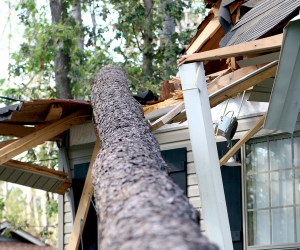
A fallen tree can puncture a roof or damage siding. Once a roof is compromised, water can enter the home, leading to additional damage inside, including ceilings, walls or personal belongings.
Cleanup can also be more involved than many homeowners expect. Removing a large tree and repairing the damage it caused can take time and may require multiple steps.
When this kind of damage happens, many homeowners start to wonder how their insurance may apply.
If a tree damages your home, your homeowners insurance may help cover the cost of repairs, especially if the damage is caused by a storm.
This may include damage to your roof or siding, as well as damage inside the home if the fallen tree creates an opening that allows water in.
There may also be coverage for removing the tree. Some policies include a set dollar limit for tree removal per tree and per claim. Understanding these limits ahead of time can help you plan and avoid surprises if a loss occurs.
Because of these details, it may be helpful to review your policy or talk with your local independent insurance agent so you understand how your coverage may apply before you need it.